OVERVIEW – On this page you can see information about Bruges and some suggestions of Things to Do. We reflect on our most recent visits to the city where we check out some of the sights, walk through the city, take a boat trip and check out historical buildings. A visit wouldn’t be complete without reference to the local food and beer culture.
Video(s) of our visit(s) accompany at the foot of this page.
ABOUT
Bruges, the capital of West Flanders in northwest Belgium, is distinguished by its canals, cobbled streets and medieval buildings. First settled many centuries ago, it developed from a 9th Century Fort built by Count Baldwin I of Flanders to defend against Vikings. Between 12-15 Centuries it became one of Europe’s wealthiest cities, particularly trading in wool and cloth.
However the inlet of Zwen that enabled access to the original port silted up and with it went much of its trade.
The city fell into a long period of decline and obscurity, which paradoxically helped preserve its medieval appearance as there was little money for modernization. During this time, the city survived on the lace industry and, for a time, served as a court in exile for Charles II of England.
Fast forward to modern times and in the late 1800’s a novel sparked interest in the `forgotten’ city. A new port was built at Zeebrugge in 1907 to connect the city back to international trade. Finally in 2000 the entire historic city center was designated as a UNESCO World Heritage site.
Population in 2025 was estimated at just over 120,000
Currency is the Euro.
THINGS TO DO
A city dating back centuries and with it’s medieval structures largely preserved gives a good start to things that you can do there. We have visited on a number of occasions and still find areas to visit or things to do. Here are just a few ideas:
Canal Boat tour offering unique views of the city.
Belfry of Bruges – climb the 366 steps to see panoramic views of the city
Visit the bustling market square – a particular delight during the festive season.
The city is easy to navigate although full of cobbled streets, however there are plenty of places to rest weary legs. Here you can treat yourself to waffles, traditional fries, mussels, hot chocolate and so much more.
City of Bruges
VISITOR TIP: Whether you are new to Bruges, or have been many times and are looking for something different, then the Visit Bruges website may be useful. Here you can get all sorts of information, prices, opening times etc.
OUR FAVOURITE THINGS TO DO
Arrival in Bruges
To date we have only visited Bruges as a day trip from a Cruise Ship. For us this involves getting on a chargeable coach organised by the cruise company (journey is approximately 30 minutes).
This does mean that you have deadlines to meet but it also guarantees arrival back at the port before the ship departs.
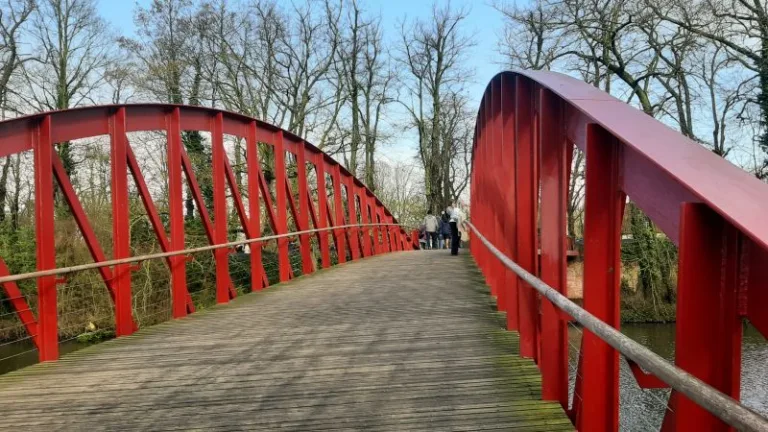
Coaches will drop off at a car park near to the Bargebrug Bridge on the outskirts of the city. It is a well worn path and an easy route to follow.
The Bridge also affords a landmark to help you get back to the drop off point.
Bargebrug Bridge, Minnewater Park, Bruges
VISITOR TIP – for those wishing to travel independently there are other options. These include a cruise express shuttle, train from nearby Blankenberge station, private taxi or uber. Some of these options may involve picking up transportation outside of the port.
Walking into the City
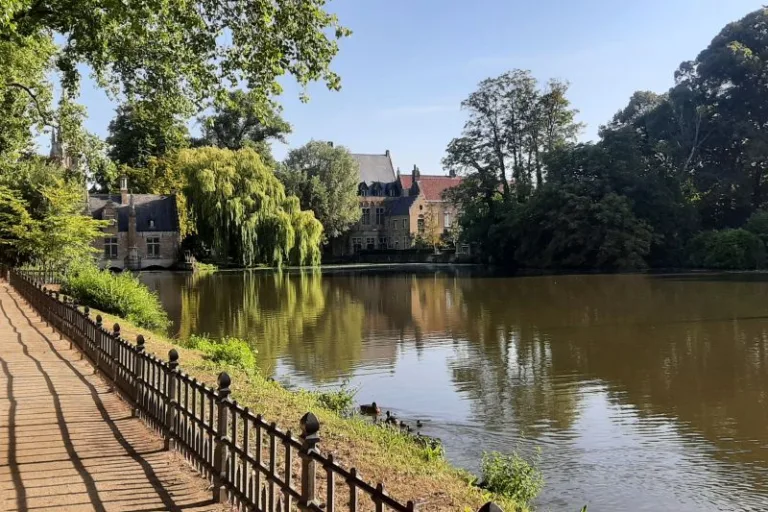
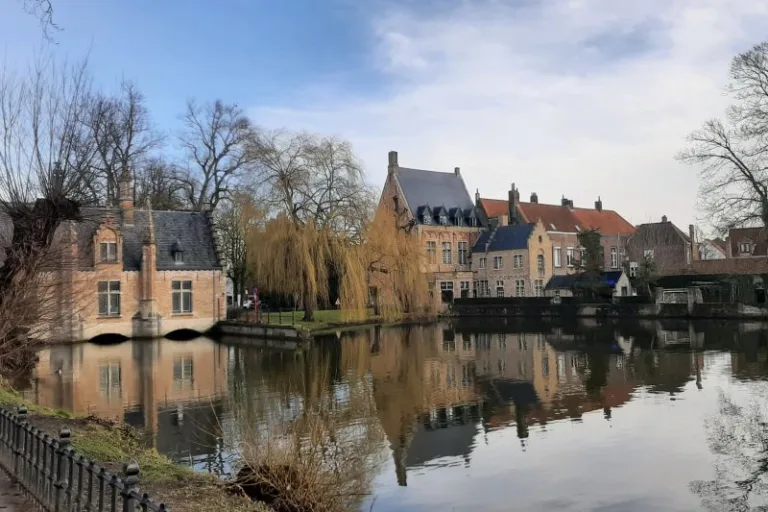
As soon as you get over the bridge you start to see the magnificent buildings of the old city. There are photo opportunties everywhere and at all different times of year.
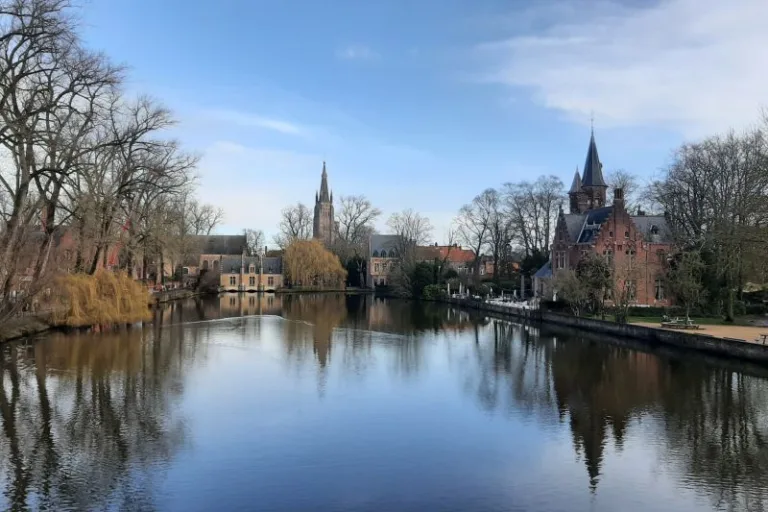
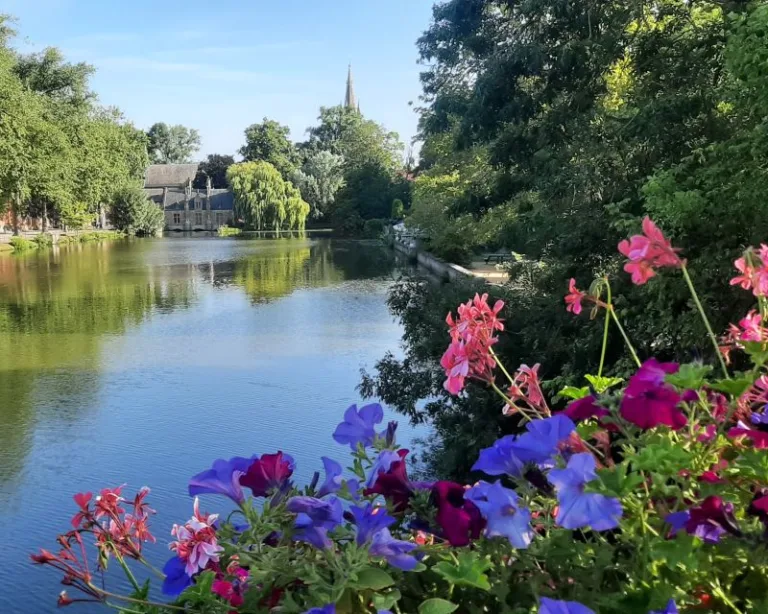
Typical example of that is below where we took photos from nearly the same spot, one in the summer and one in winter.
Image of Bruges taken in summer months
Similar image taken in winter
Navigating the city to its centre is relatively straight forward. In general it is just a case of following everyone else. There are of course lots of different streets and alleyways to explore along the route. If you are on a guided tour you will hear all about the history of the buildings and the people that lived there. It is well worth doing at least once.
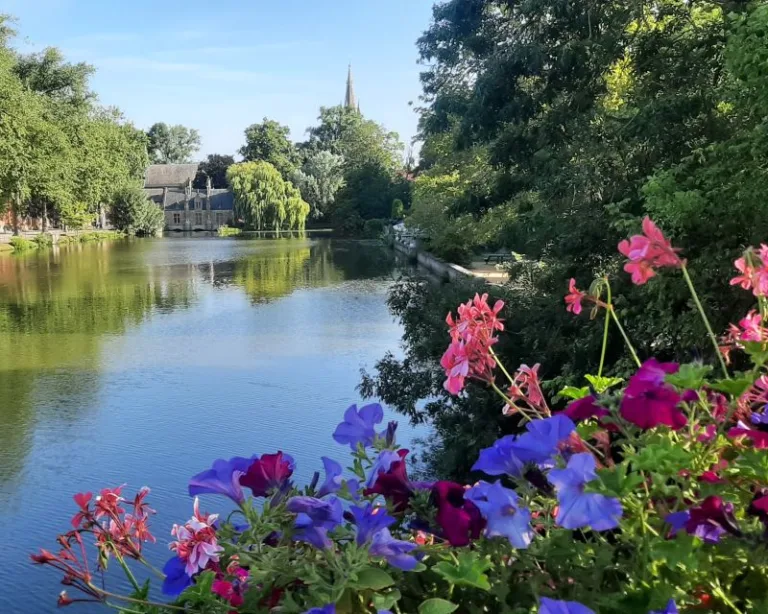
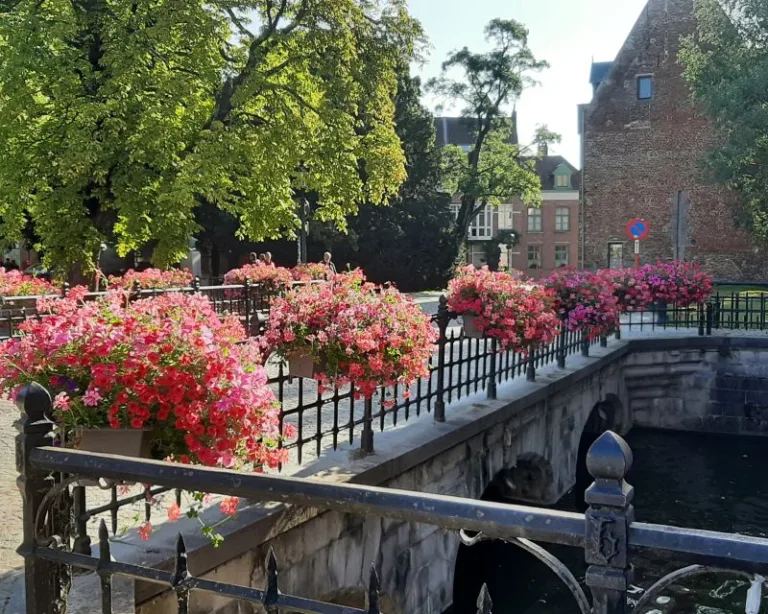
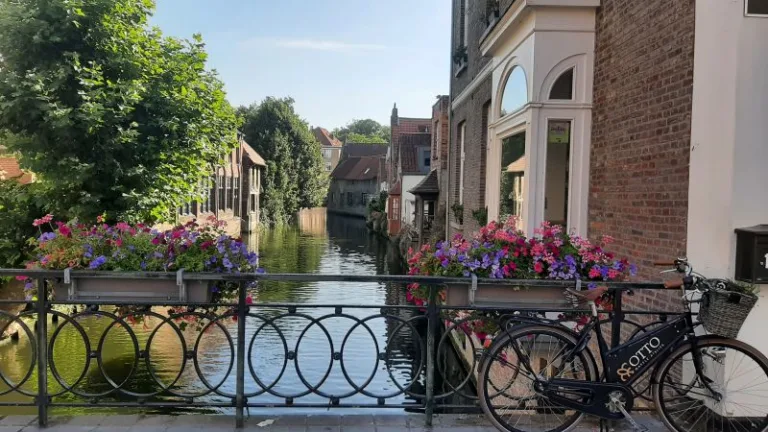
These days we are quite happy to meander through the streets that have in essence not changed for centuries. It is comforting to know that these buildings and views are being preserved for future generations. The displays of flowers across the city are beautiful to see.
View of a canal in Bruges
Crossing into the City
Beautiful flowers on display
Historic Buildings
The city is full of historic buildings many of which are open to the public.
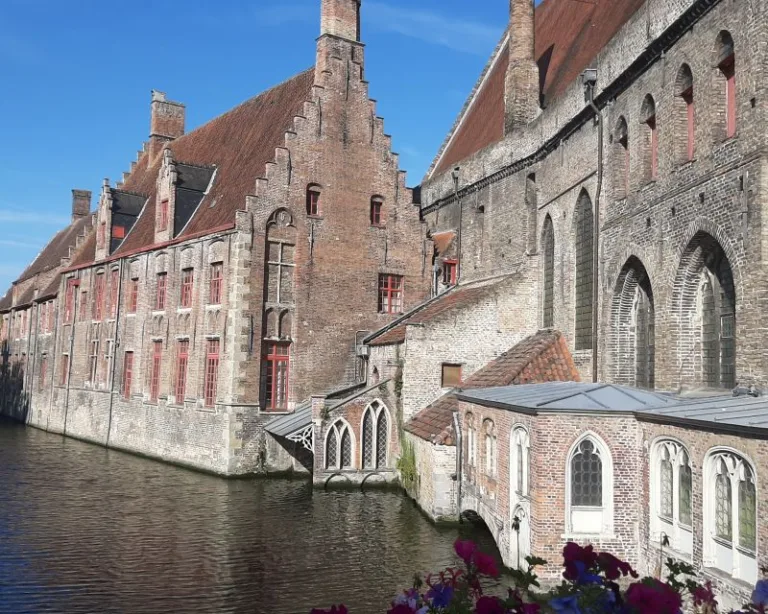
St John’s Hospital is one such building. Founded in the mid 12th Century the premises contains some of Europe’s oldest surviving hospital buildings.
Originally managed by Augustine nuns (and monks until 1584) there was still care undertaken until quite recently. The main complex is now unused.
Entry to the museum is available daily at a reasonable price.
St John's Hospital from the Canal
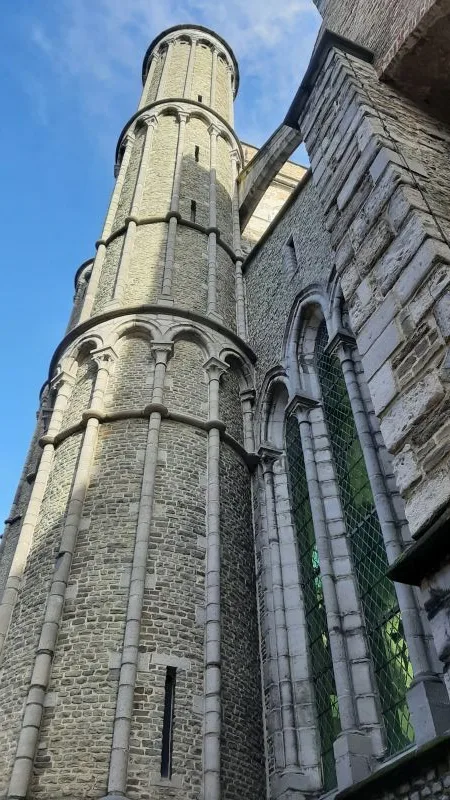
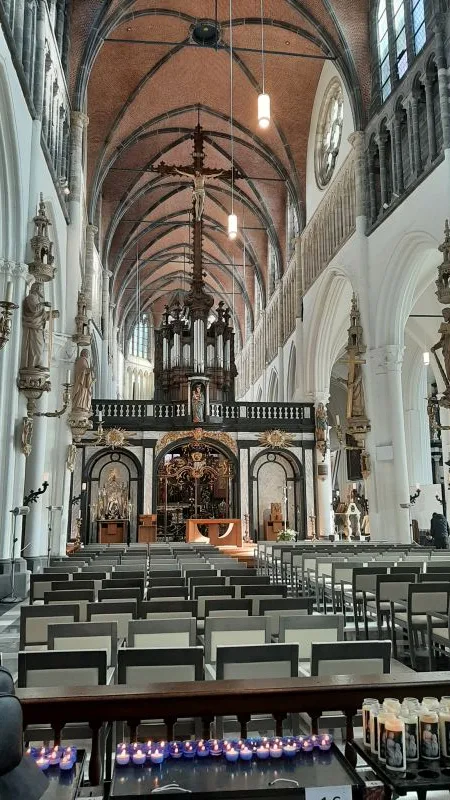
Nearby is the Church of Our Lady and we managed to get a look inside on our most recent visit to Bruges. A Roman Catholic church, it dates back to the 13th Century. Its 115.6-metre-high tower remains the tallest structure in the city and the third tallest brickwork church tower in the world. Today it holds services, concerts and displays of religious art. It’s most famous artwork is the Madonna and Child sculpture by Michaelangelo.
Church of Our Lady Tower
Internal view of the Church
Centre of Bruges
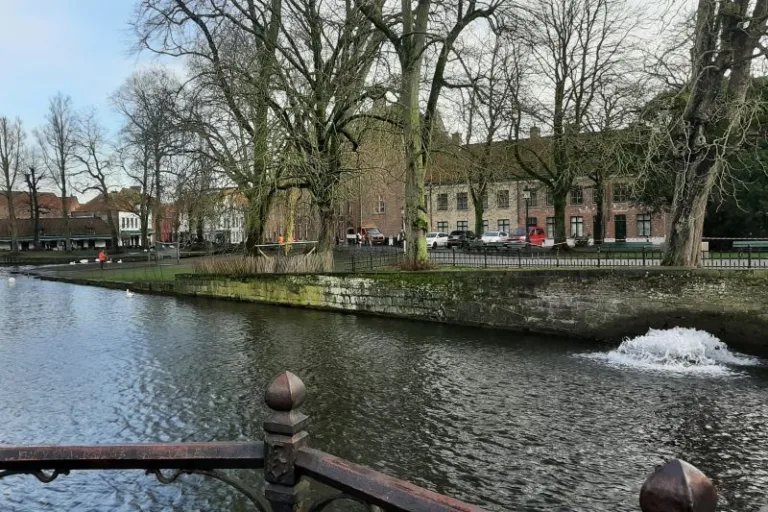
The heart of the city revolves around the historic Market Square. On the way there you pass beautiful vistas of the buildings and canals.
On reaching the main square there are historic buildings, restaurants and bars.
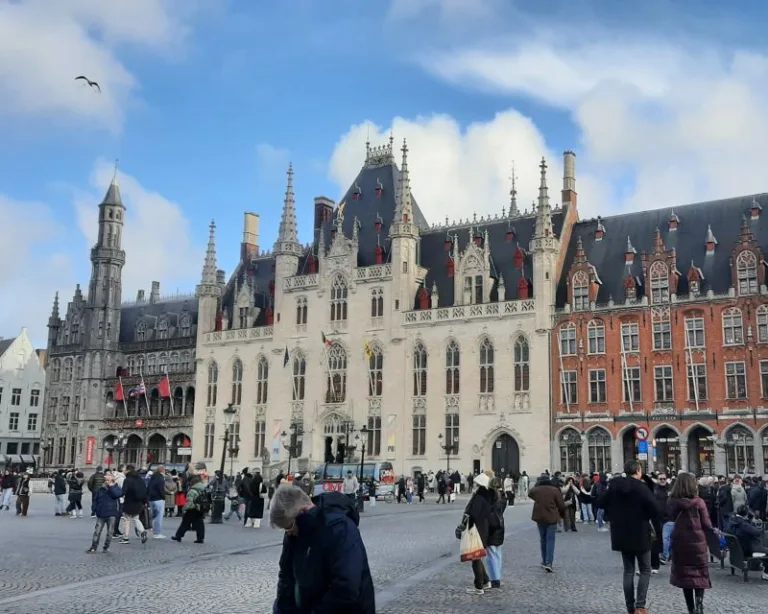
Buildings include the neo-Gothic Provincial Palace. Formerly a seat of provincial government it now houses an interactive exhibition of the City’s Golden Age.
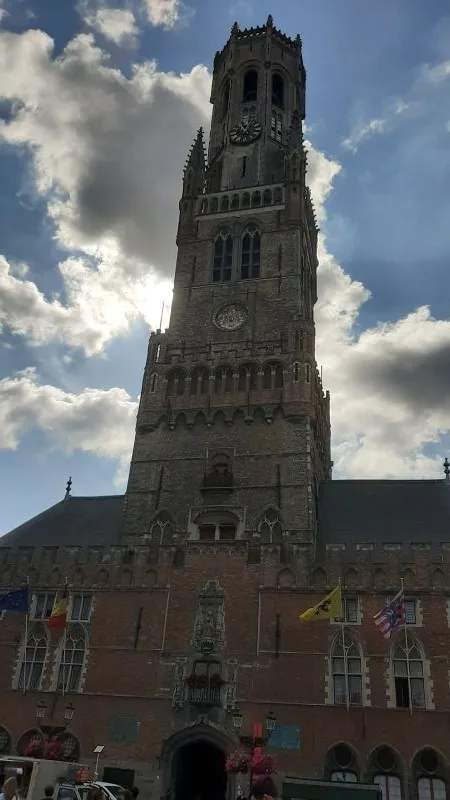
Here is also found the Belfry of Bruges, a medieval bell tower standing 83 metres high and dating back to the mid 13th Century. Tickets to enter the tower start from around 13 Euros.
Canal in the Centre of Bruges
Provincial Palace, Bruges
Belfry of Bruges
Canal Boat Tours
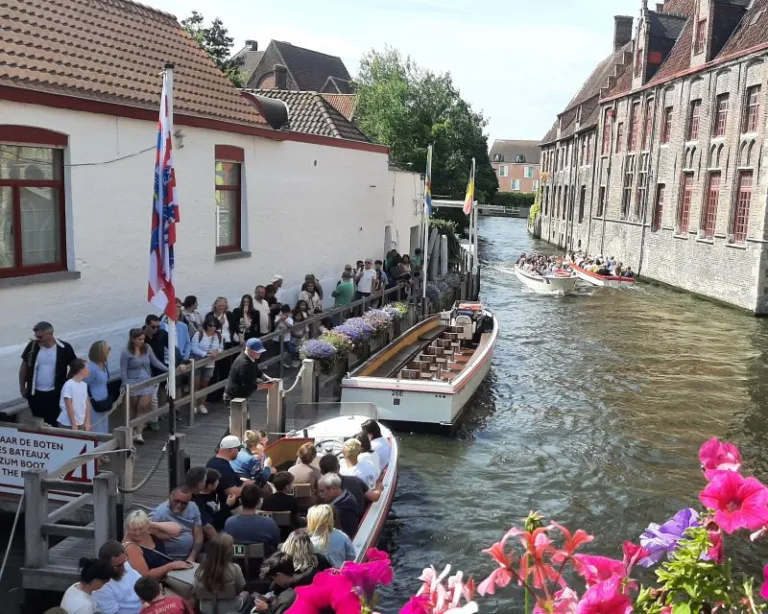
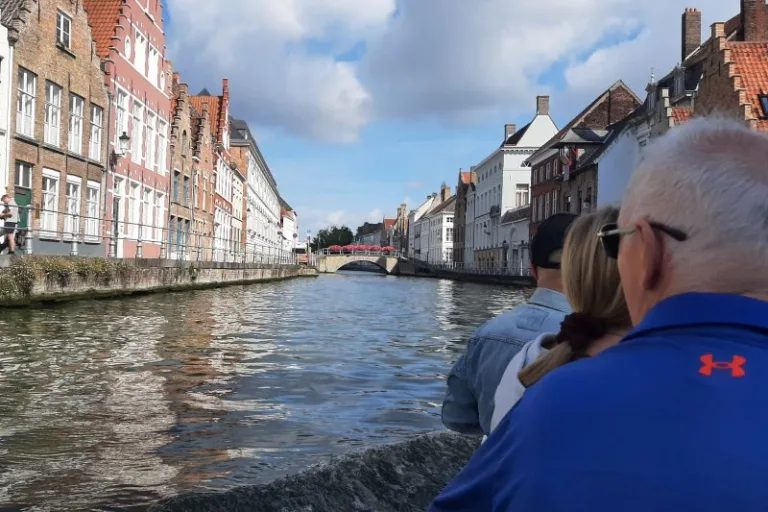
A popular way to view the city is from one of the many Canal Boat Tours. Your tour will take you through the main canals of the city and gives a unique view.
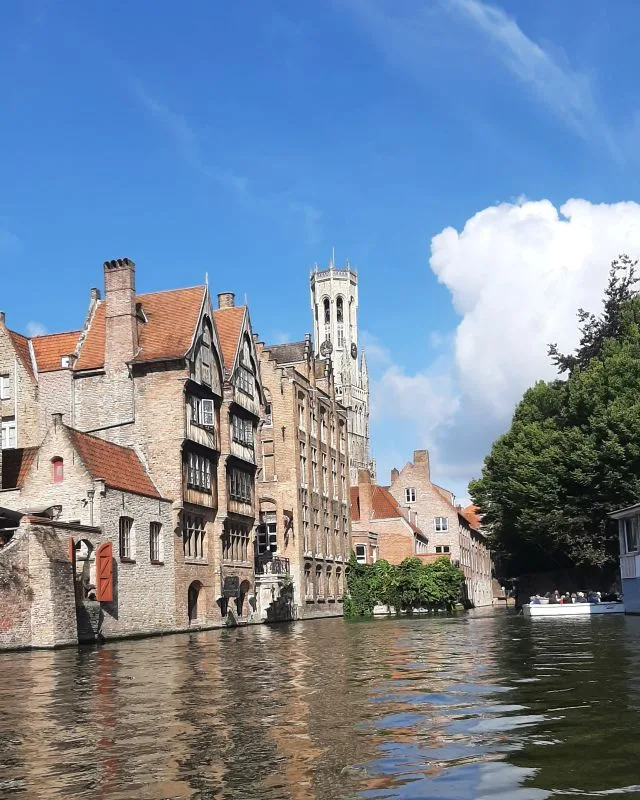
Many of the buildings cannot be seen from any other angle. It is quite amazing how they sit on the side of the water, as they have done for centuries.
Your guide will give a commentary as you travel through the heart of Bruges for approximately 30 minutes.
If you are really lucky you may be accompanied by some of the city swans.
Start of the Canal trip
View from the Canal Boat
Seeing the buildings at close quarters
The historic buildings are too many to mention here but there are useful website such as Visit Bruges that give valuable information.
Meanwhile, we always seem to find our way to this market square during our visits. In the pre-festive time this is the location of a large Christmas Market and Ice Rink.
Bruges has much more to offer than historic buildings and below are just a few of the examples.
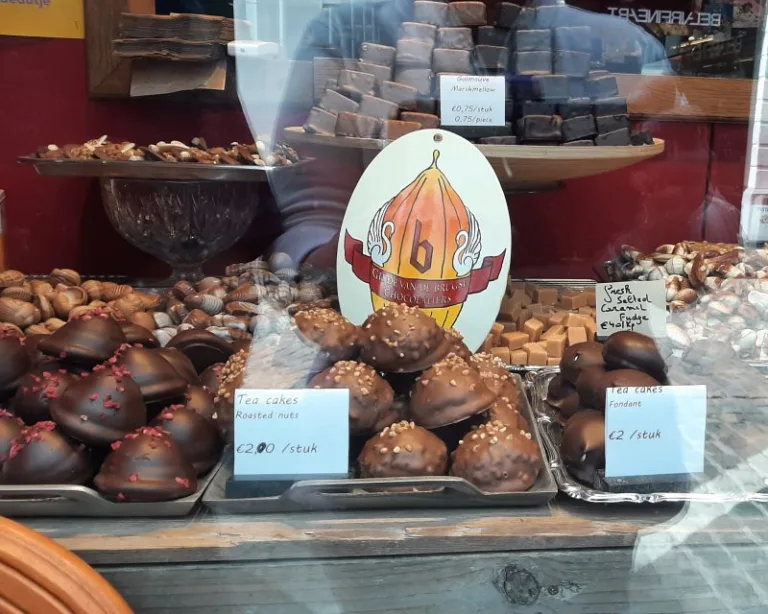
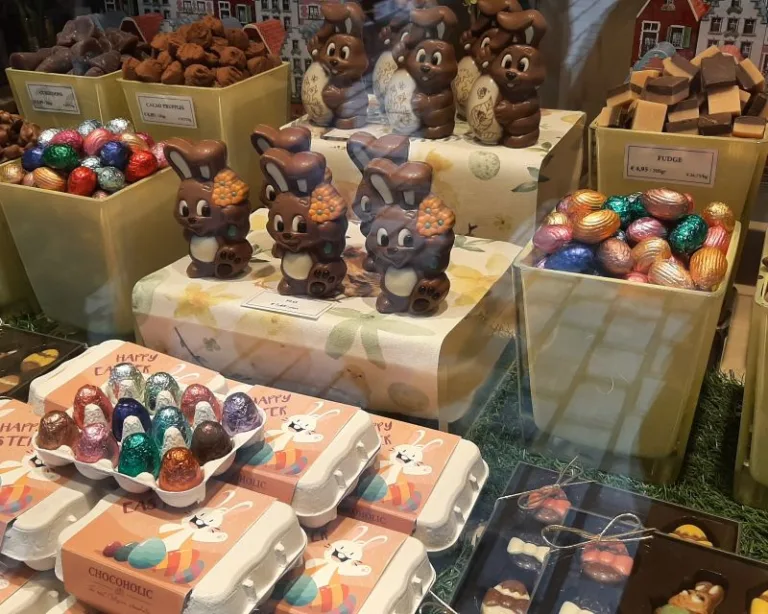
Belgian Chocolate
One of the first things to come to mind when visiting Belgium, and particularly Bruges, is chocolate. Its history in the area dates back to 1635, when the abbot of Baudeloo Abbey in Ghent bought some chocolate. At that time, chocolate was only used by pharmacists as a tonic.
Production of chocolate continued over centuries and new items were developed. Examples of this development include the first chocolate with a soft filling was developed in 1912. Then in 1952 the first chocolate spread was developed.
It is big business. Annual turnover in the Belgian chocolate industry is estimated to be 4,179 billion Euros.
And it isn’t produced just for export and tourists. The average Belgian resident will consume upwards of 6kg of chocolate annually.
You will find shops throughout Bruges selling chocolate and candies. As a real fan you may even consider booking a tasting tour!
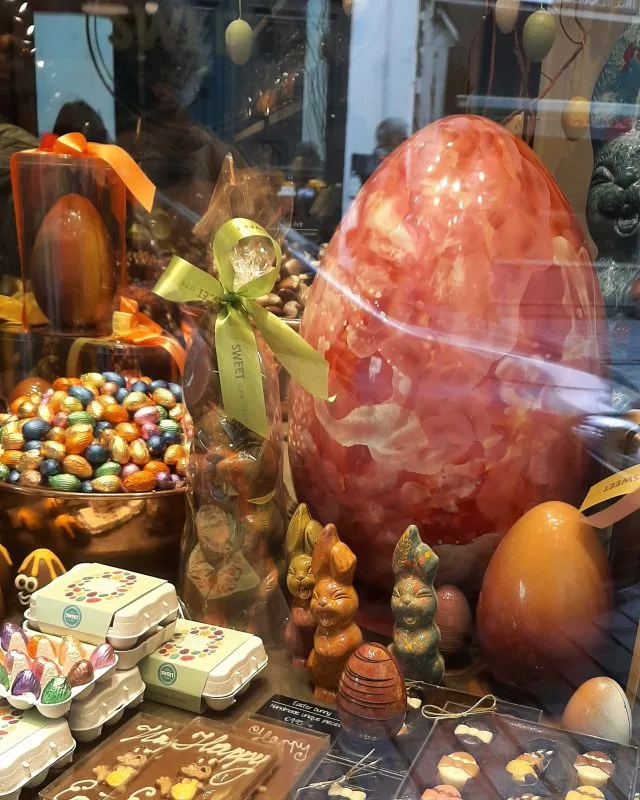
Chocolate Egg Window Display
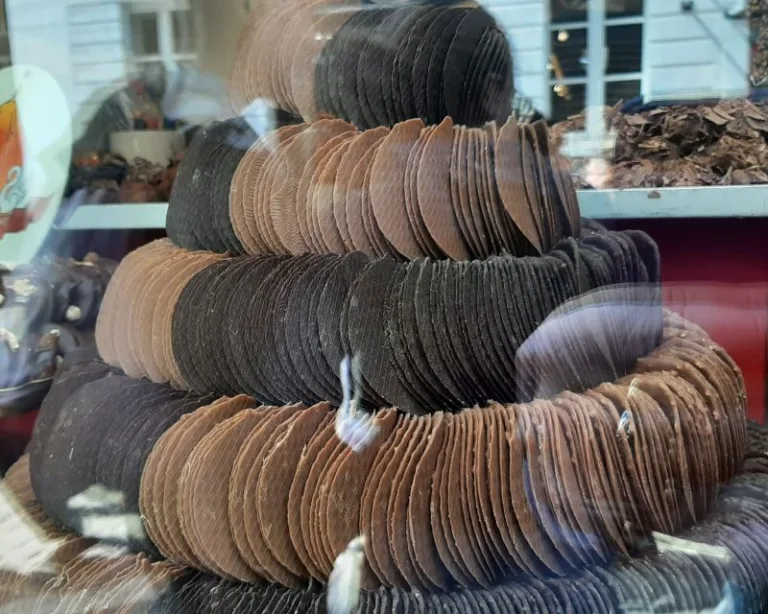
Mendiants in a window display
Teacakes and Fudge
Easter Treats
Belgian Beer
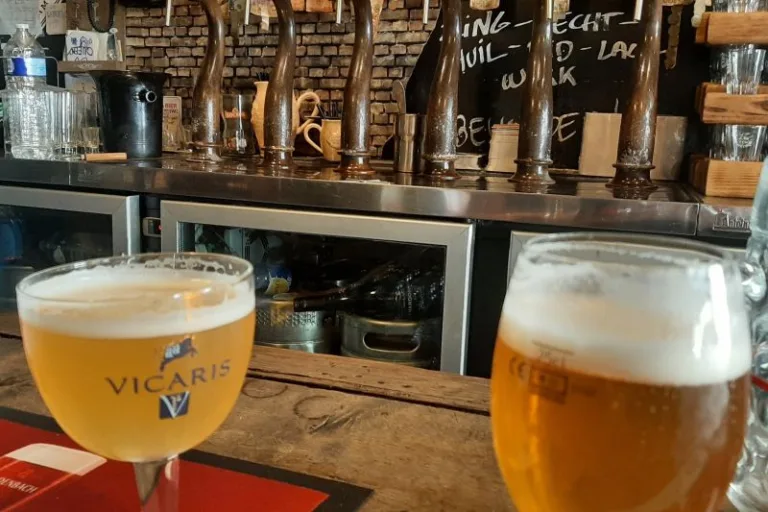
Something else that comes to mind is Belgian Beer. It is thought that the first beers were brewed in the area during Roman times. Originally it was a domestic task undertaken by women but that developed over the centuries into a tradition that today forms the heart of Belgian beer culture.
As in many countries drinking beer was seen to be `safer’ than drinking water. However over time beer became a craft product brewed by monks. Techniques in the 12th Century still form the basis of brewing today.
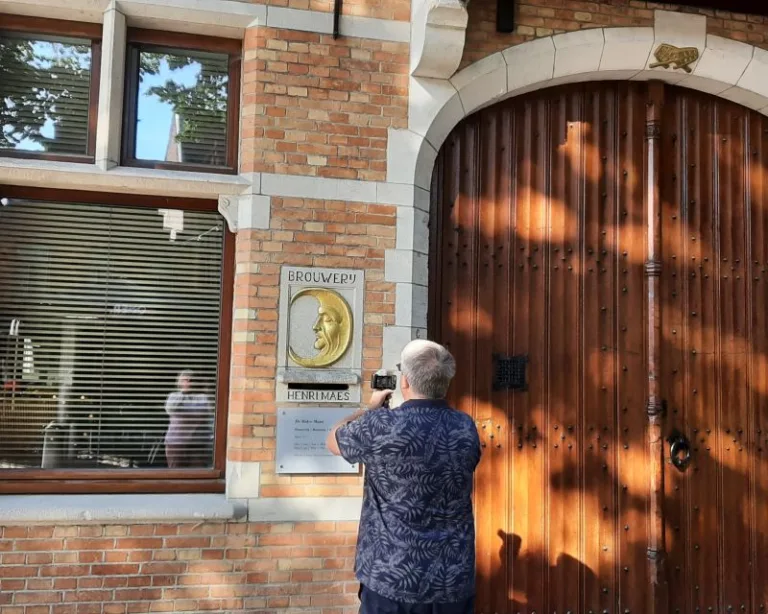
The development of the brews and techniques, although largely similar, have been improved over the years. Today there is a mixture of old breweries (De Halve Maan dates back to 1856), microbreweries and craft breweries that thrive in Bruges.
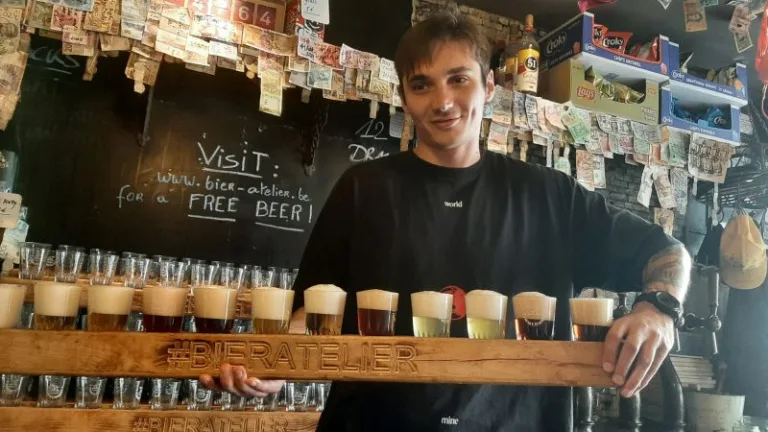
Strolling through the city you can experience these however for those who wish to take their tasting a little more seriously there are Belgian Beer Tours that you can book.
Outside the De Halve Maan Brewer
Flight of beer at Bieratelier
Choice of the Day
Legend of the Swans
The most popular legend regarding the Swans of Bruges dates back to the late 1400’s. The locals had been forbidden by Emperor Maximillian of Austria to hold any festivities and taxes were constantly being raised by his Marshall. Eventually the people rioted, the local Marshall captured and beheaded. The Emperor, also captured, eventually escaped but took his revenge.
In tribute to his friend and Marshall Pieter Lanchals (translated as long neck), th Emperor forced them to keep 101 white swans (long necks) on the water of Bruges for all eternity. If they failed to do so, Bruges would fall to ruin.
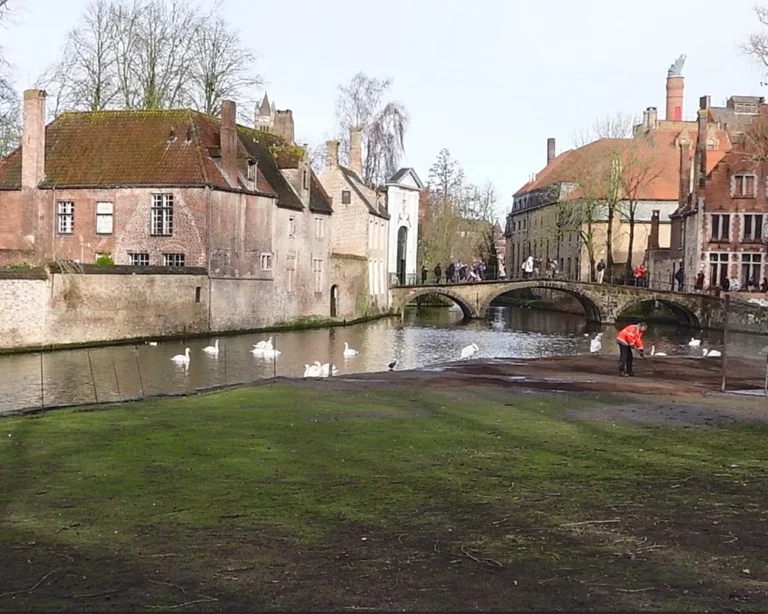
Whether it is true or not, the people of Bruges still honour the legend and swans still inhabit the city.
Swans in Minnewater Park
Conclusion
We could go on for ages about other things that you can see and do in Bruges. There are waffles to eat – with a hot chocolate of course.
Mussels are a staple dish, served with frites and local beer. If you like mussels (we don’t) then this is the place to eat them.
Belgian Lace is centuries old, handmade and high quality. It has been used in fine linens since the 17th Century although authentic hand-made lace today is rare.
The city is full of things to do and you can easily spend a weekend here, or several day trips whilst on a Cruise. Undoubtedly we shall be here again and will have more to add to this page.
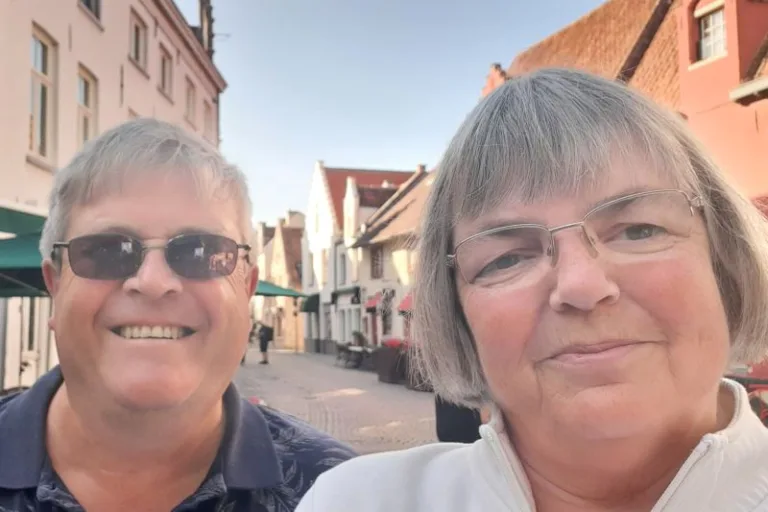
Strolling through Bruges streets
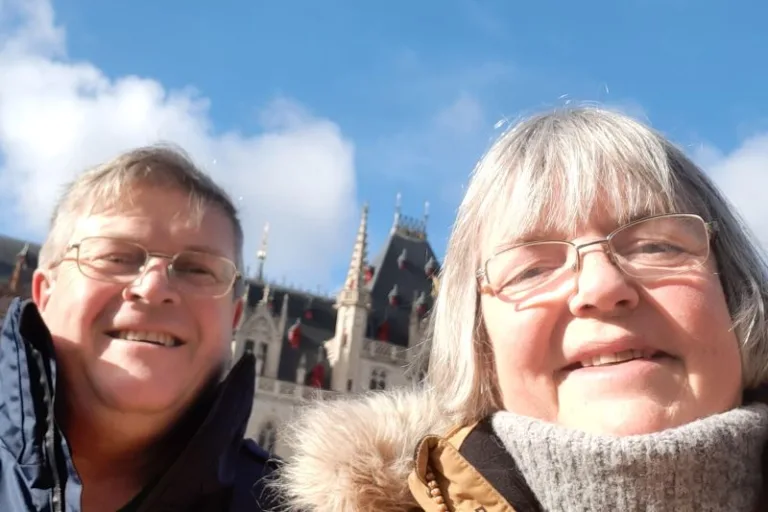
Time spent in the Market Square
Finally stop for Hot Chocolate
Accompanying Videos
To check out our experiences in Bruges just click the video below – and if you enjoy the content simply ‘Like’ and ‘Subscribe’ to see more (subscription is free).