OVERVIEW – On this page you can see information about Warnemunde and Rostock and some suggestions of Things to Do.
We reflect on our visits including: a guided tour in Rostock, a boat trip along the Warnow River, a tour into the local countryside which included a ride on a steam train and time spent strolling through Warnemunde.
Video(s) of our visit(s) accompany at the foot of this page.
ABOUT
Our first visit to this area was aboard P&O Cruises Aurora. The second was aboard Oceania Cruises Vista.
Founded in about 1200, Warnemünde was for centuries a small fishing village with minor importance for the economic and cultural development of the region. In 1323 Warnemünde lost its autonomous status as it was purchased by the city of Rostock in order to safeguard the city’s access to the Baltic Sea.
Rostock meanwhile dates back to the 7th Century when it was known as `RozToc’ which means the River that Widens. It is the only member of the Historic Highlights of Germany that is situated on the coast.
There are many historic attractions across the area as Rostock was a thriving member of the medieval Hanseatic League. Many fine buildings still remain from that era.
Today the area still has thriving industries in shipping, manufacturing, tourism and the cruise industry.
THINGS TO DO
There is much to do in and around Warnemunde and Rostock. Some ideas include guided tours of each town, memorials and museums.
Warnemunde has a Heritage Museum and the lighthouse is an interesting stop. There are tours to the lighthouse but there is a minimum height restriction to enter the tower. It is an easy town to walk through and of course there are beaches nearby.
Rostock is nearby and within easy reach of the port. Points of interest include a local distillary and walking tours of this historic city.
Of course you may wish to venture further into some of the museums including the Maritime Museum, a culture museum or an Adventure Village.
An easy area to walk
OUR FAVOURITE THINGS TO DO
Rostock
This was our first visit to the area of Warnemunde and Rostock, so we decided to take an organised tour.
The tour started in a siding where we boarded a vintage tram which network was originally opened in 1881 as a horse-car operation. It was converted to electric operation in 1904. Today they provide a nostalgic 25-minute ride into the heart of the city.
Our guide was very knowledgeable so was able to give us first hand information of living in the area. He was even able to let us see some East German coins.
The journey does not take long but is quite interesting travelling through the streets and having to join onto the general city tramlines. Be prepared for the seats to be a little uncomfortable!
Vintage Tram
City Walk
The next part of our tour took us on a walk through the central part of the city. A stopped at the Rathaus (Town Hall) enabled the guide to show us a little of the historic building and a model of the old city. The latter was very interesting to show the development of the city through the centuries. Meanwhile the building itself was originally constructed in 1270 and was a two-storey house with vaulted cellar. Its look is vastly different as it is built of red brick and various architectural features whether they be Gothic, Renaissance or Baroque. We were able to walk freely into the foyer area of the Rathaus and there are public convenieces available too.
Rostock Model in Rathaus foyer
Rostock Rathaus
Model depicting a maritime link
Astronomical Clock
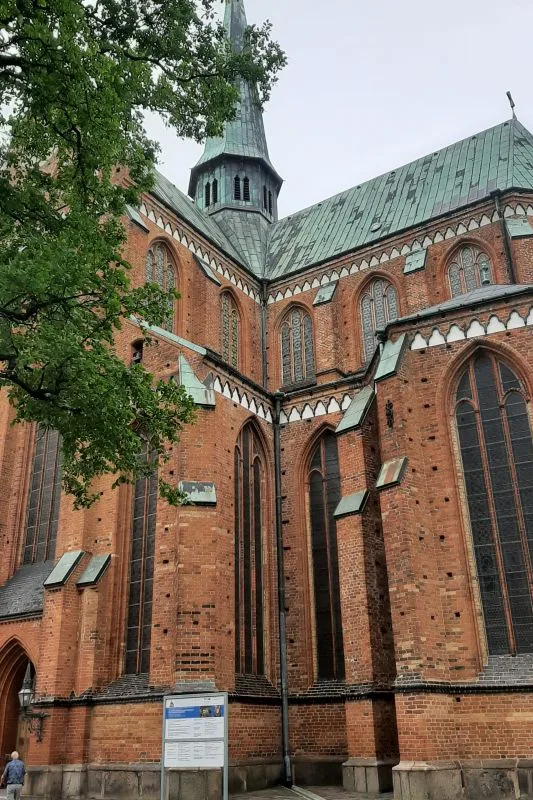
Our visit also took us to St Mary’s Church. The first reference to a church on this site was in 1232, which is thought to be the predecessor of the current building. It was enlarged at the end of the 14th Century to the basilica as it it stands today.
Beautiful as the church is, the most interesting feature is probably the Astronomical Clock. Built in 1472 it is one of few of its kind still working in the world (there is another in Wells Cathedral, Somerset that pre-dates the one in Rostock). It was fascinating to hear of its history and how it is maintained today.
St Mary's Church, Rostock
Astronomical Clock
Astronomical Clock
Rostock Town
A brief stop in a square for a take-away coffee also gave us the opportunity to have a good look at the Joy of Life Fountain. This symbolizes the unity and interrelationship between man, animal and water qith its groups of figures, 26 bubblers and 18 fountains. During the evenings, weekends and bank holidays it becomes a central point for local families to meet.
From there we walked to the jetty where we boarded a river boat which took us along the Warnow River back to Warnemunde.
Together with some light refreshment on board this was a nice way to complete our trip and to see our ship from the wa
The Joy of Life Fountain
Mecklenburg Countryside and Railway
During our next visit to this area aboard Oceania Vista we took a tour to the Mecklenburg Countryside and Railway.
We went by coach through the countryside to our first stop which was a Minster at Bad Doberan.
First founded in 1171 the first Abbey on the site was also used as a burial site for regional rulers. It is important both historically and politically.
Over the centuries the buildings have been through wars, fires, looting, rebuilding and dissolution.
Most recent renovations have seen the restoration of the church itself and the high altar. Since that time there has been much more work – which is ongoing.
Services are still held here and there are also concerts and of course guided tours.
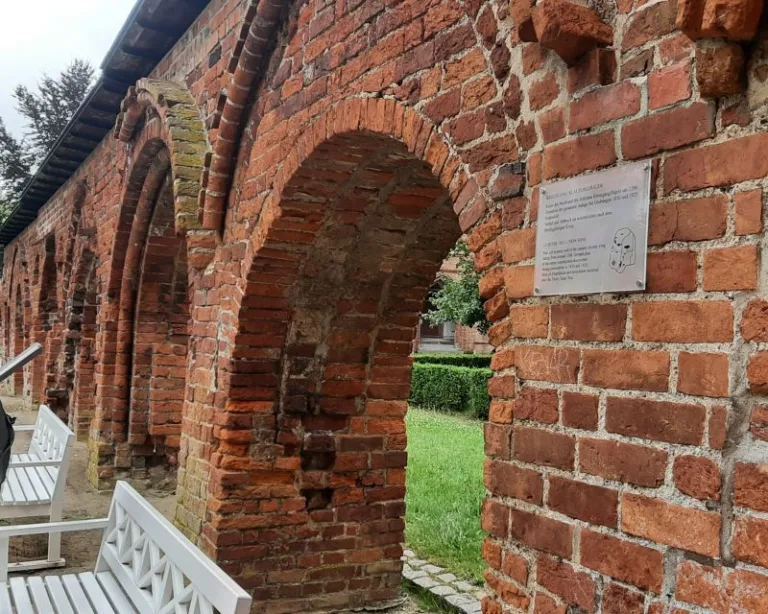
The grounds are also open and you can still see very clearly parts of the cloisters from the original Abbey.
Monastery at Bad Doberan
Remains of the Abbey Cloisters
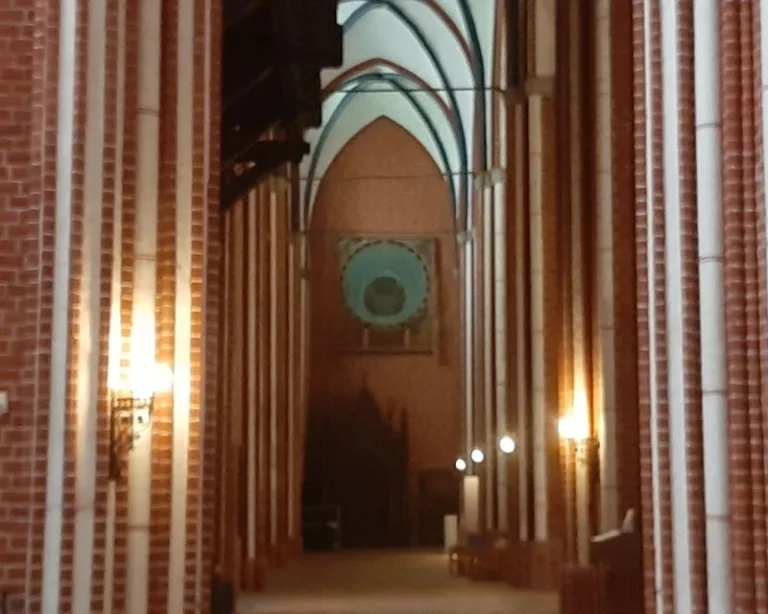
Example of the Gothic Architecture
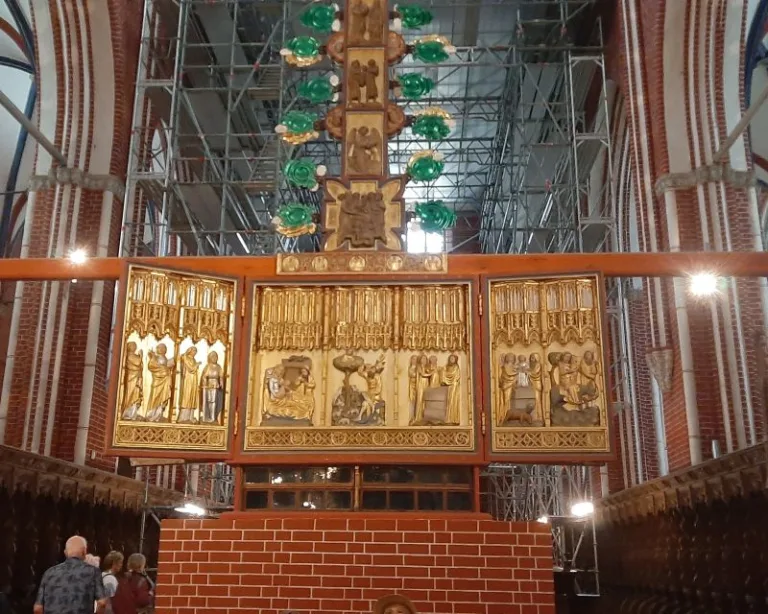
Part of the Double-sided High Altar
Mecklenburgische Baderbahn Molli
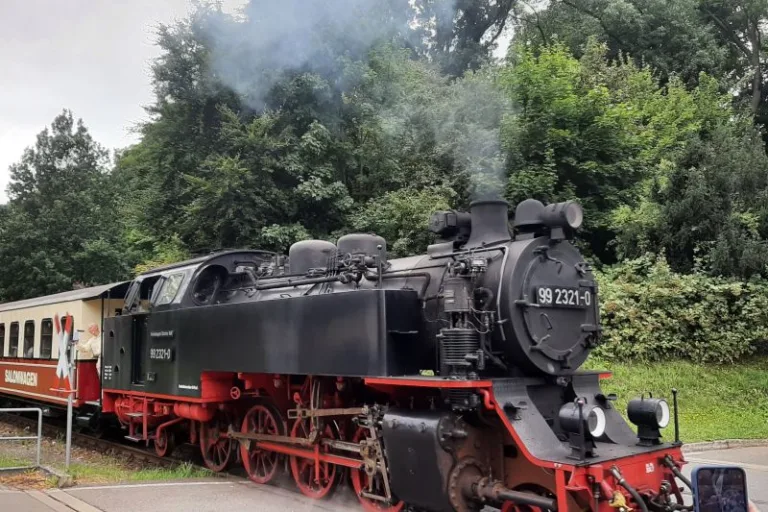
Our coach took us a short distance to where we boarded the steam train, Molli.
First opened in 1886 this historic narrow-gauge railway with a gauge of 900mm carries more than half a million passengers annually.
The name `Molli’ originated with a local lady who was with her pet dog Molli. As the dog ran away from her and she shouted “Stop Molli”. The train driver thought she was shouting at him to stop and he did. A local knickname was born and is now part of the heritage of this railway.
Molli Train
From the littlestatin, the train passed through Heiligendamm to Kühlungsborn. A journey of 15.43Km which takes about 40 minutes. With stops along the way it is used by tourists and locals alike. Even having a winter timetable to enable local use. It was beautiful and nostalgic – we even had our tickets `punched’ in the old fashioned way.
This beautifully restored train was a delight to travel on – wonderful. The highlight of this particular tour.
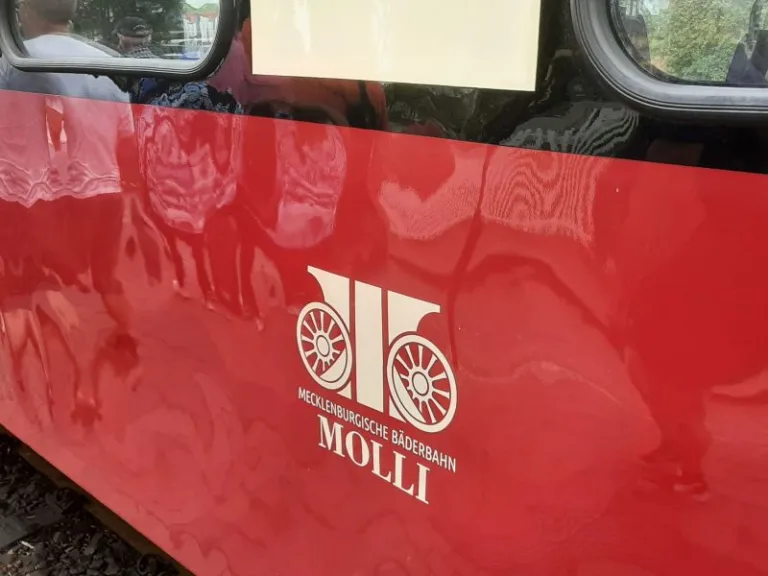
Molli Train logo
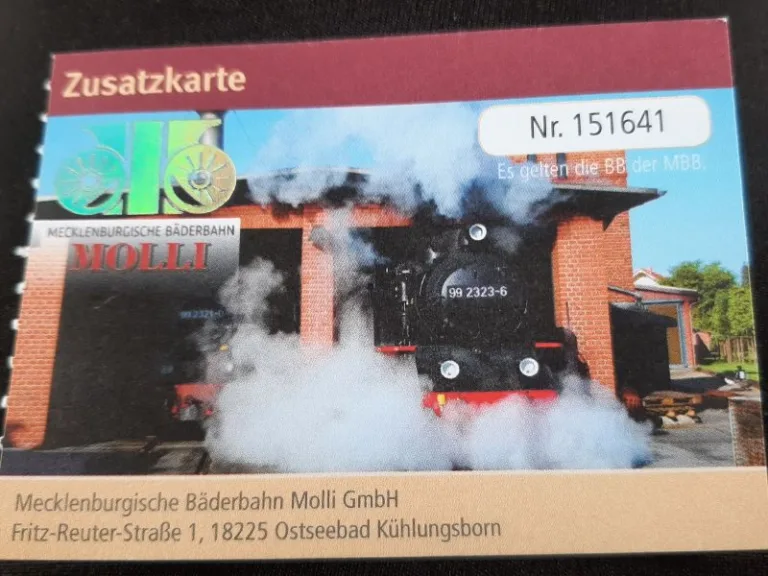
Molli Train Ticket
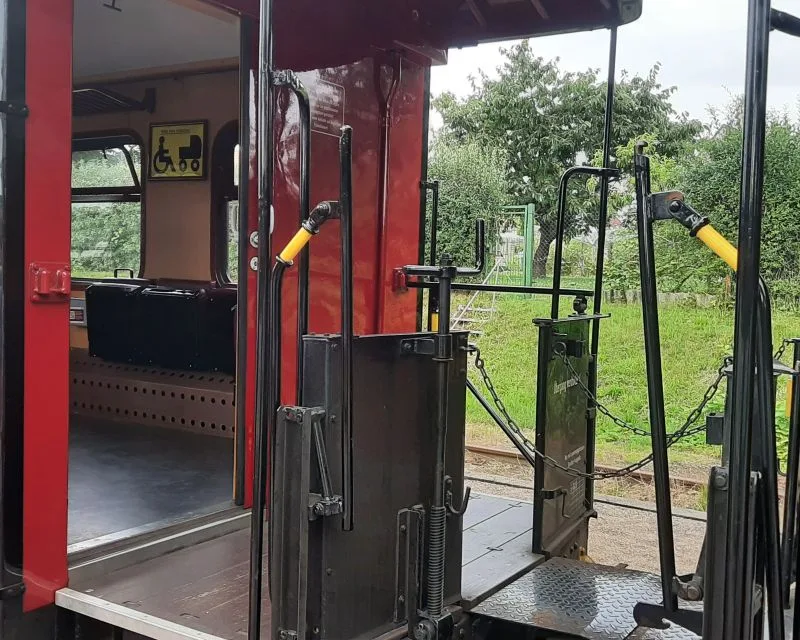
Entrance to the carriage
Kühlungsborn – the Baltic Border Tower
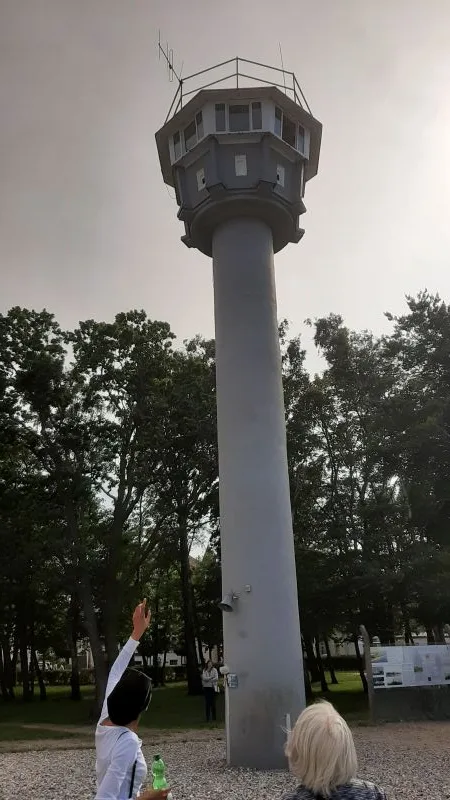
On reaching Kühlungsborn we were driven from the station into the town where we could have free time. There was also an opportunity to visit a Baltic Border Tower. This particular tower was erected in 1972 and enabled a viewing point of about 15miles from the top of it. One of only 2 in existence now it has been preserved by a local Society. Its aim is to show how these towers were used to gain intelligence and look for people trying to escape the local political regime. Most attempts to get to West Germany resulted in loss of life, if captured they would be imprisoned.
Whilst there is not much to see, the history is fascinating with important lessons to be learned.
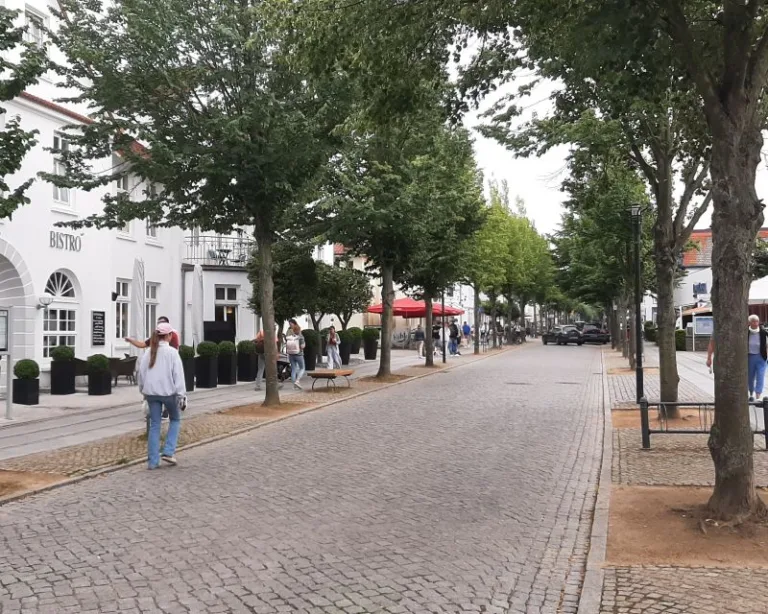
Street in Kuhlungsborn
Baltic Border Tower
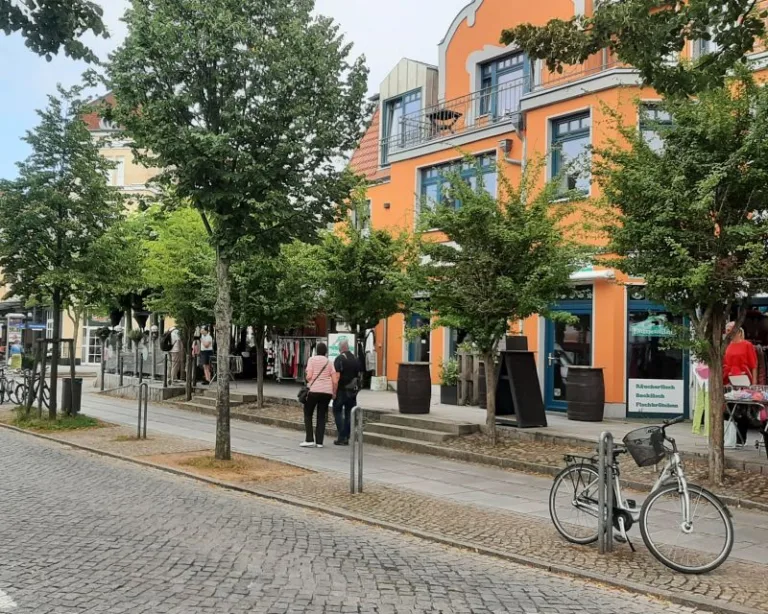
Another tree-lined Street in Kuhlungsborn
Warnemunde Town
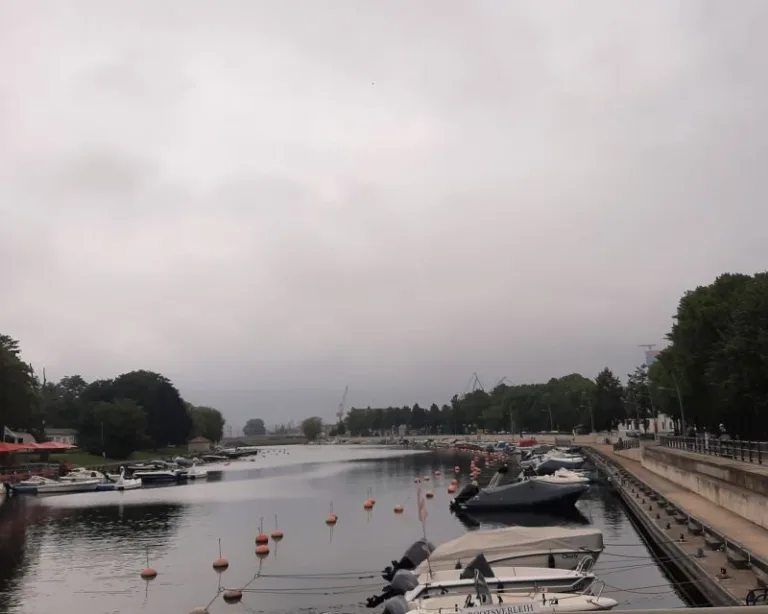
On both of our visits to Warnemunde we encountered rain. But what a lovely little place it is. There are many bars and restaurants that line the river on either side of a central bridge. Some are on river boats or barges.
It really doesn’t take long to walk to the residential area with its little streets and beautifully maintained houses. A small market square also had vendors selling Bratwurst sausage hot dogs and other local foods – well it would have been rude not to try.
Boats and Bars on the river
Bratwurst Hot Dog
Colourful front gardens
Sandwelt
Warnemunde hosts the annual Sandwelt or Sand World competition in May. The contest attracts a handful of talented artists from across Europe creating incredibly detailed sand sculptures. When the festival week is on you can see the sculptors at work. For a period of time afterwards, their art remains on exhibition in a sculpture garden under protected canopies. Some examples below along with some other photos taken on the day.
This is definitely an area we would like to visit again and perhaps spend more time in Warnemunde.
Sand Sculpture - Neptune
Sand Sculpture - Under the Sea
Sand Sculpture - Mermaid
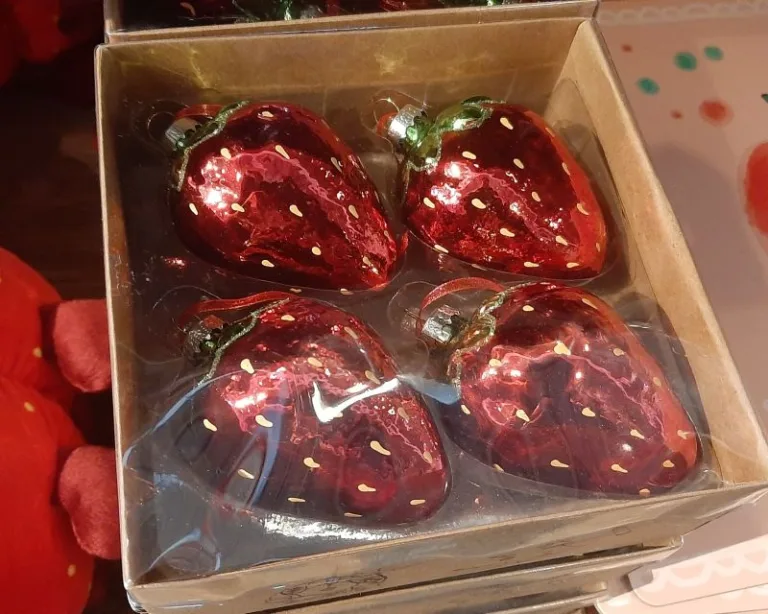
Strawberry baubles
If you visit in July you may also encounter the Warnemunde Week which features summer concerts and festivals.
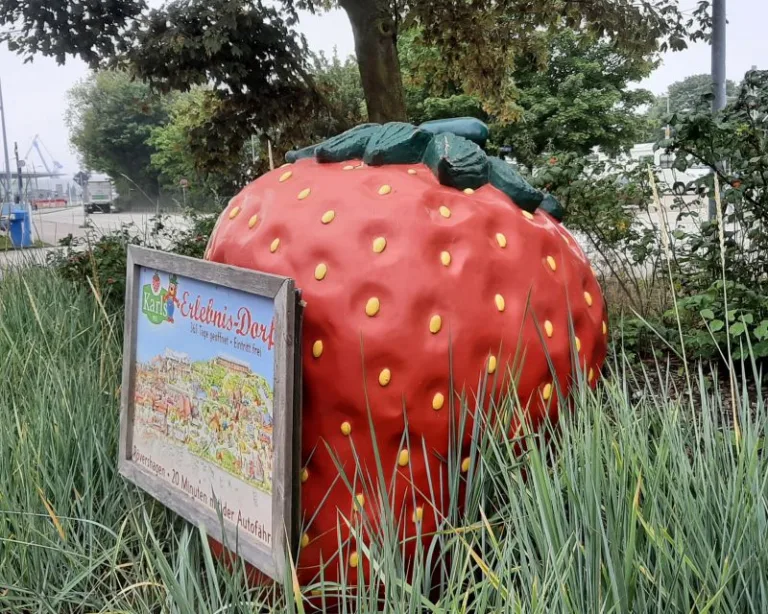
Nearby strawberry fields are full of locals picking the strawberries ready to preserve in various ways – or just to enjoy eating them.
Whether its jams and jellies, chocolate, liqueur, tea towels or baubles for the Christmas tree you will find it here!
Strawberries take all forms
ADDITIONAL PHOTOS
Aurora Docked in Warnemunde
One of the tourist river boats
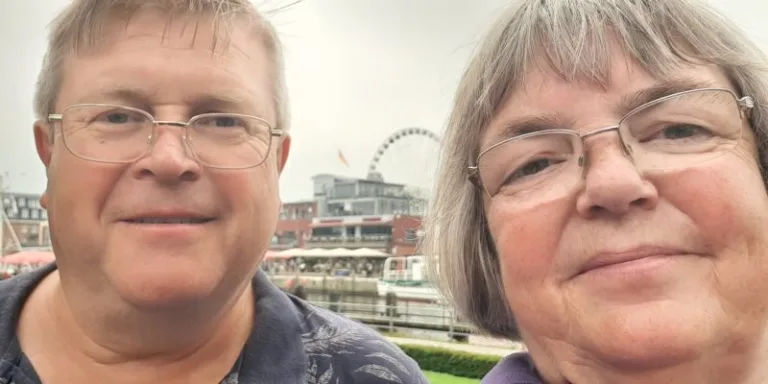
Light refreshment for Dilys and `friend'
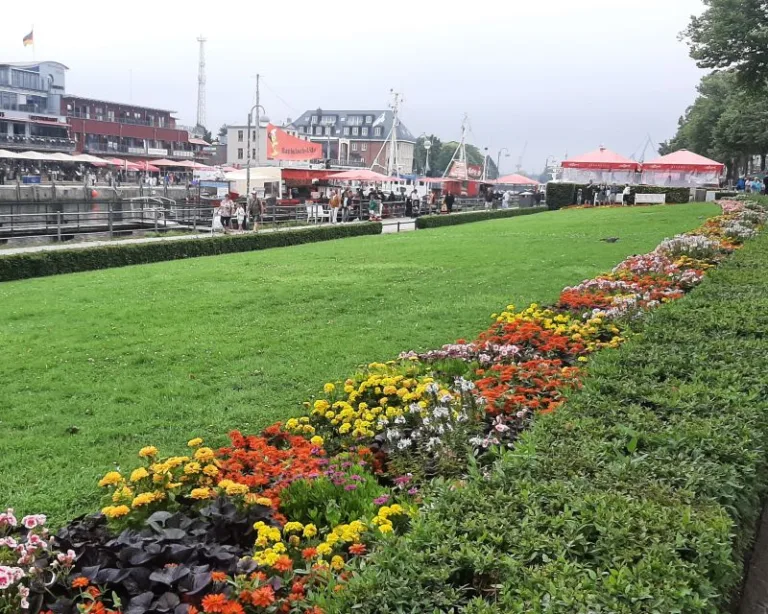
Park beside the local river
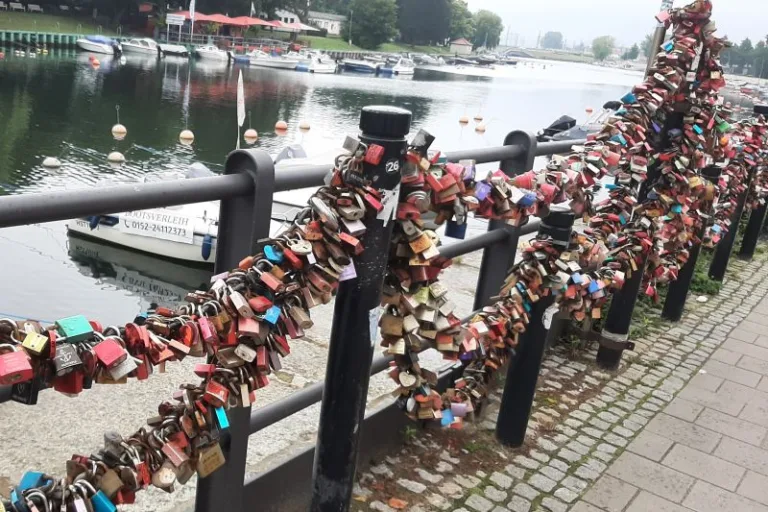
`Love Locks' on the riverside
View of the Warnow River
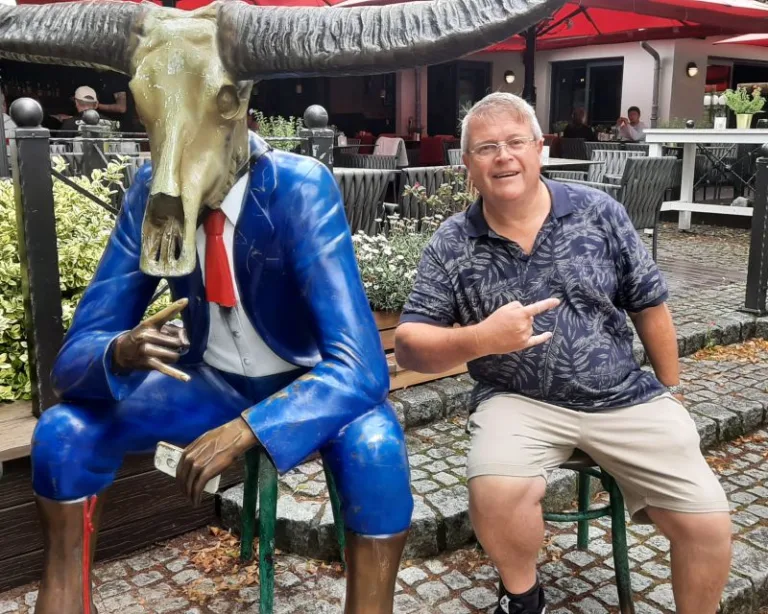
Ken finds a friend in Warnemunde
Strolling through Warnemunde
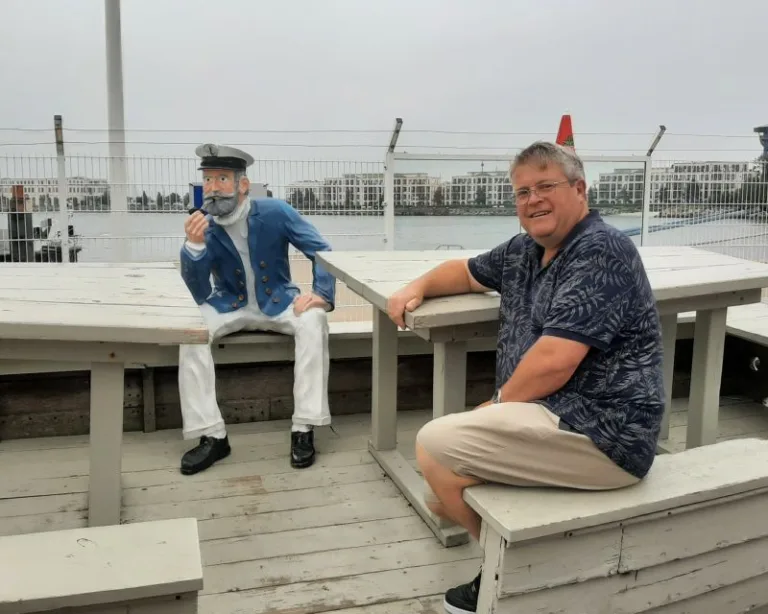
Here's the old sea dog!
Accompanying Videos
To check out our experiences in Warnemunde and Rostock just click the videos below – and if you enjoy the content simply Like' and `Subscribe’ to see more (subscription is free)